
Despite all the setbacks, I still wanted to wrap up the riding season with one more bike meet, together with my good friend Micky.
 We decided to visit Badlands, a new multi-day bike event in the Limburg metropolis of Lottum.

Great weather, good company, and well-earned refreshments. :)
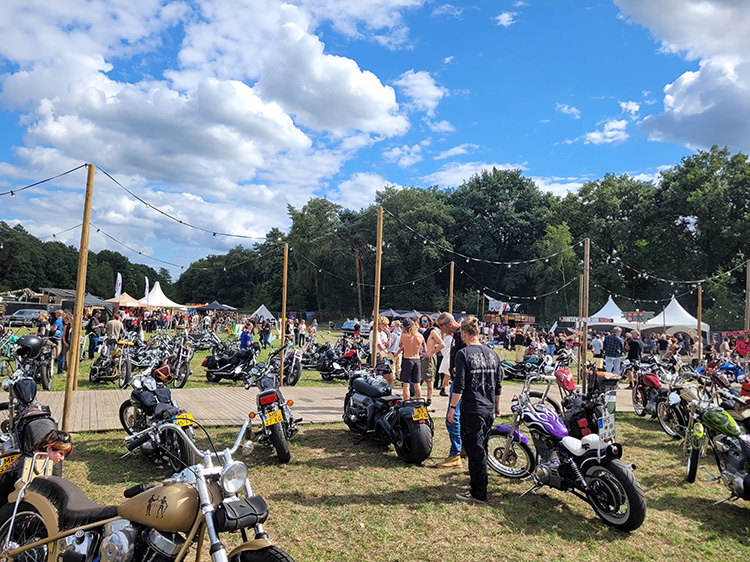
Nice location and once again a strong seventies atmosphere, very Harley and Chevy minded. My V8 will probably always remain the odd one out at these meets, just like the CBX, but … I can live with that.
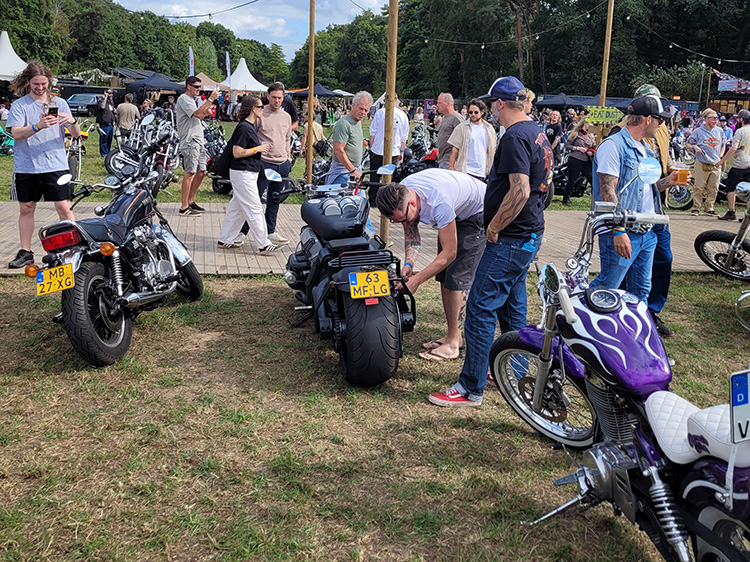
And every now and then people simply had to touch it; what’s new? ;)
 Met memorable characters, like Harry.
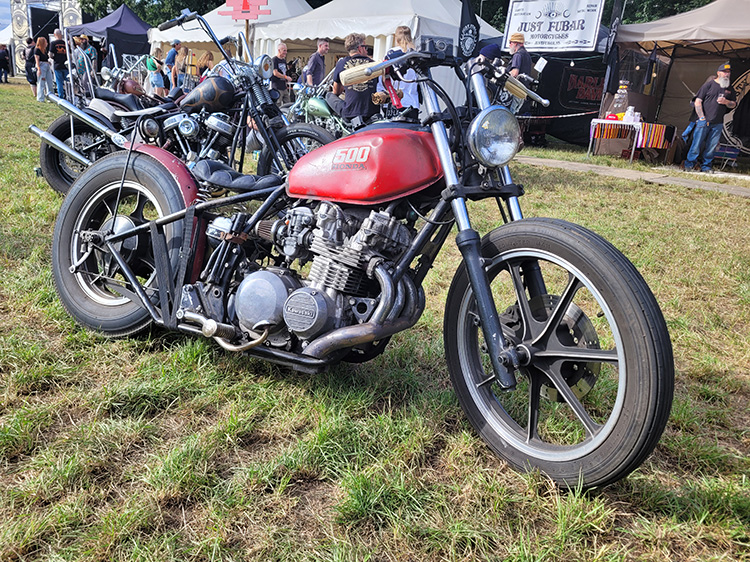
Wandering around between the bikes. Some low-budget projects simply looked good.
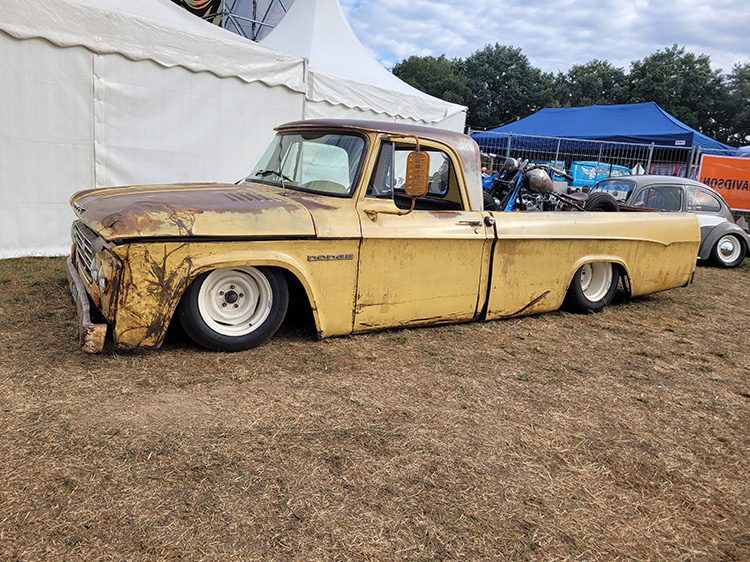
The Harley and Chevy scenes blend perfectly. Besides beautiful pickups like this one, there were also plenty of vans present.
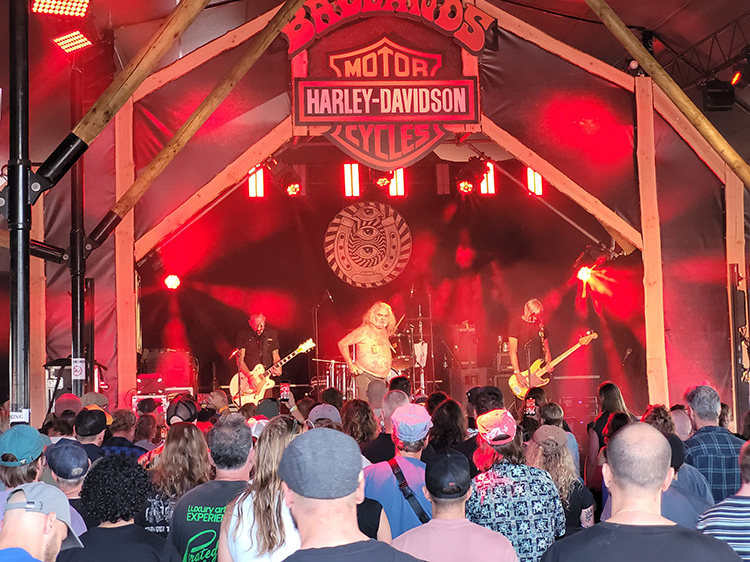
And at any self-respecting meet there’s live music. Here Dikke Dennis (‘Fat Dennis’) performed, an absolute stage animal. Not exactly a gifted singer, but packed with infectious energy.

Body-shaming clearly isn’t his thing, which is perfectly fine. Luckily someone stood in front of him when things got a bit too revealing.

The music and atmosphere were great, lots of variety.
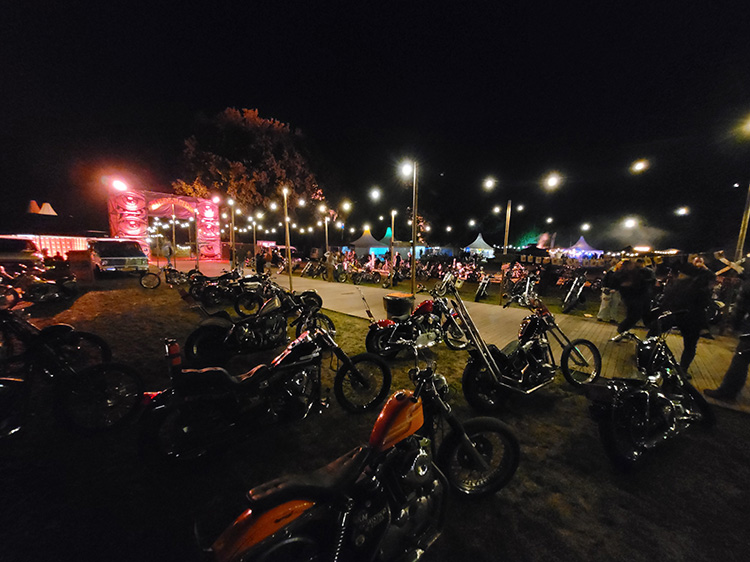
At night nobody messed with anyone else’s bike, security made sure of that too.
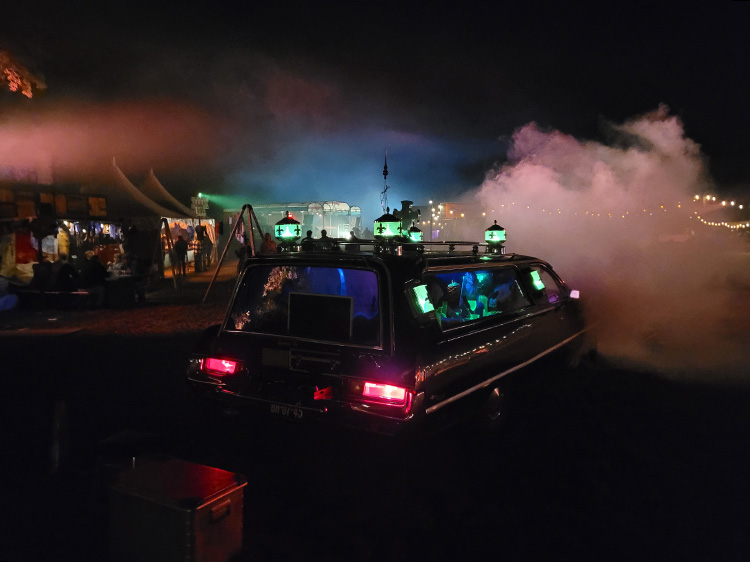
Every now and then a car was smoked up to add to the festivities.
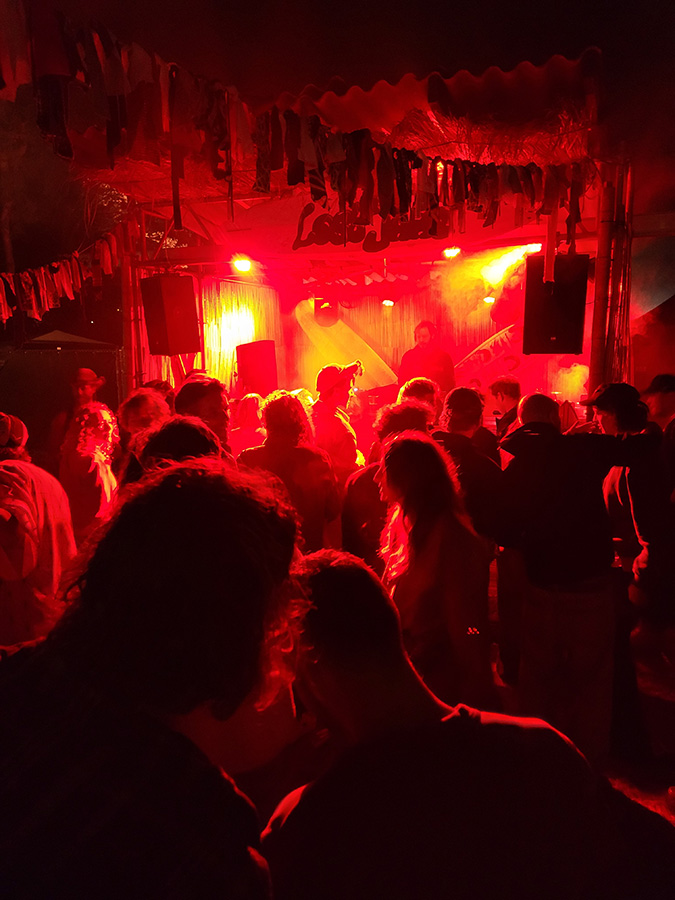 End of the evening: techno, always a solid closing act. Love it.

Yes, genuinely a great party. I already have my ticket for next year.
 The ride there and back went completely smoothly: no more instability, tire and wheel did their job.
One point remains: the heat around the legs needs attention.
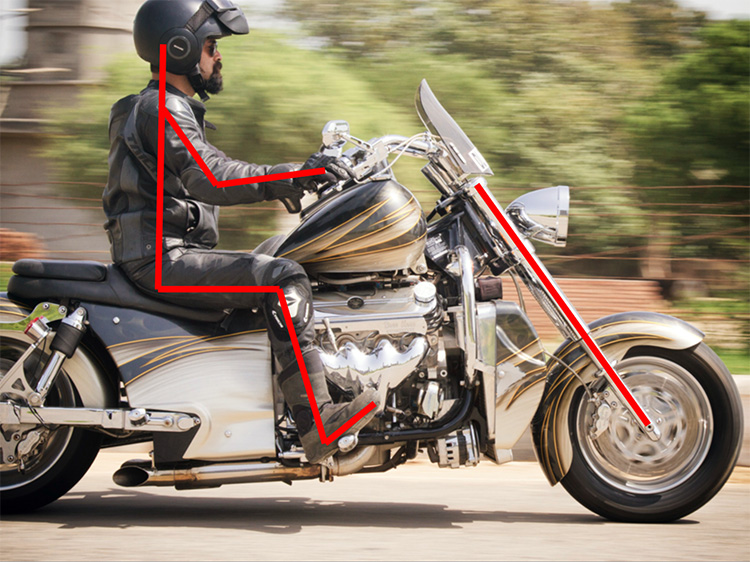
Some context: the majority of other V8 bikes are basically choppers, with a laid-back head angle and an upright riding position, like riding a horse. Most importantly, the rider sits behind the engine and therefore behind the exhausts.
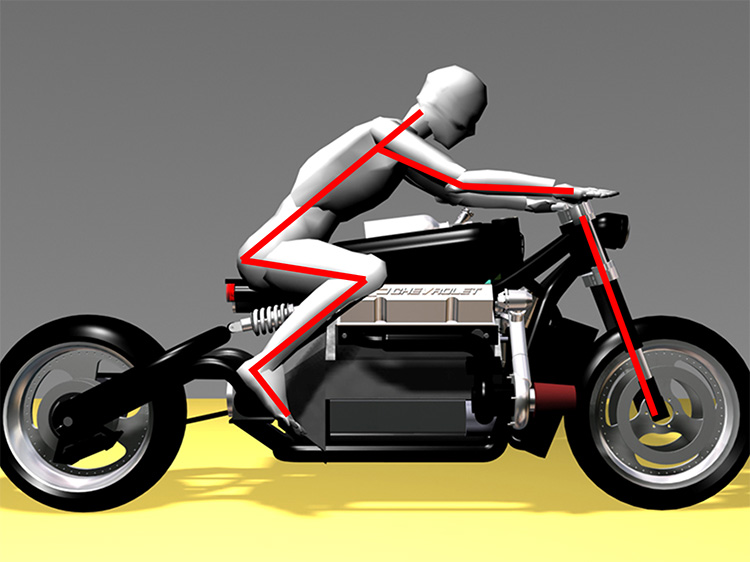
Not mine: extremely steep head angle, racer-style riding position, not behind but over the engine, so legs and calves close to the exhausts.

In real life: this position.
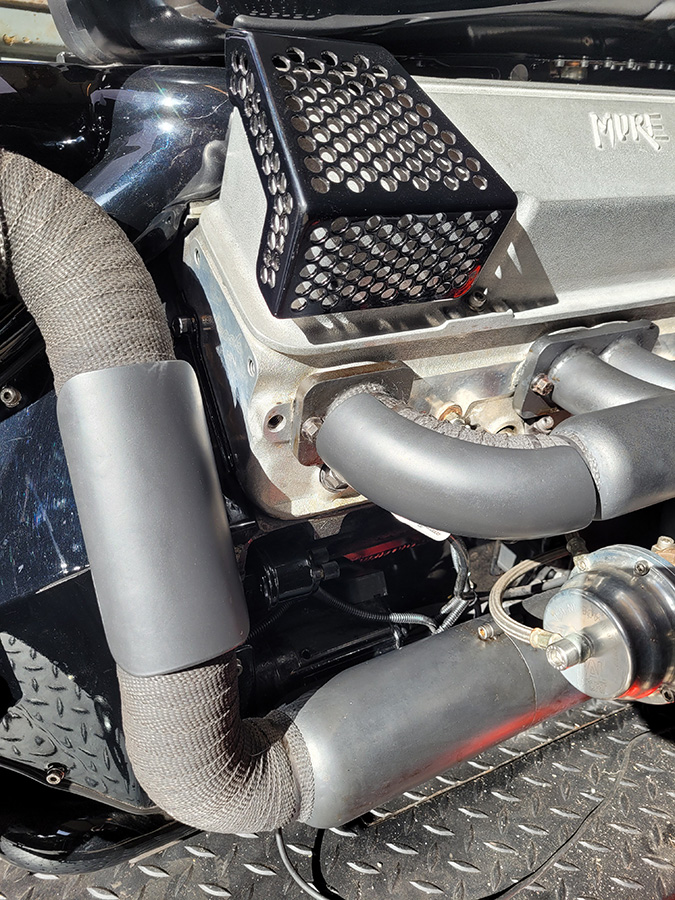 I tried to shield the exhaust heat as well as possible: black ceramic coating to keep the heat in, exhaust wrap covering that, and ceramic-coated heat shields on top …

…with heat-reflective gold coating on the inside. That should have been enough, I thought. Or better: I hoped.
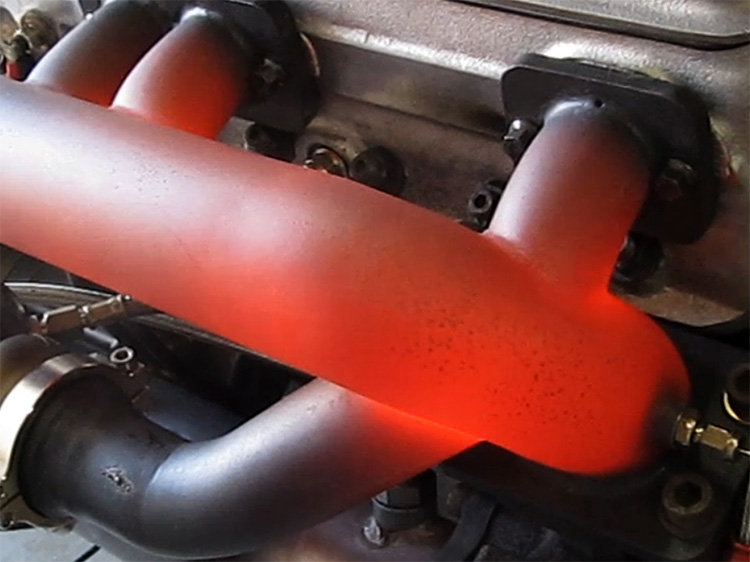
But still …
With enough airflow it’s manageable, but in traffic jams, at traffic lights or in city traffic the radiant heat becomes almost unbearable.
(It only gets as hot as in this photo on the Dyno, by the way.)
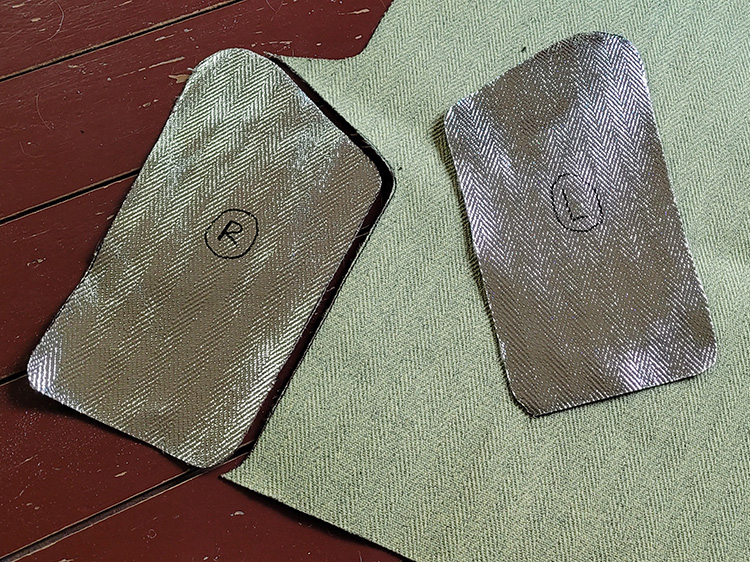
While researching fire-resistant materials I came across aluminum-coated Kevlar fabric.
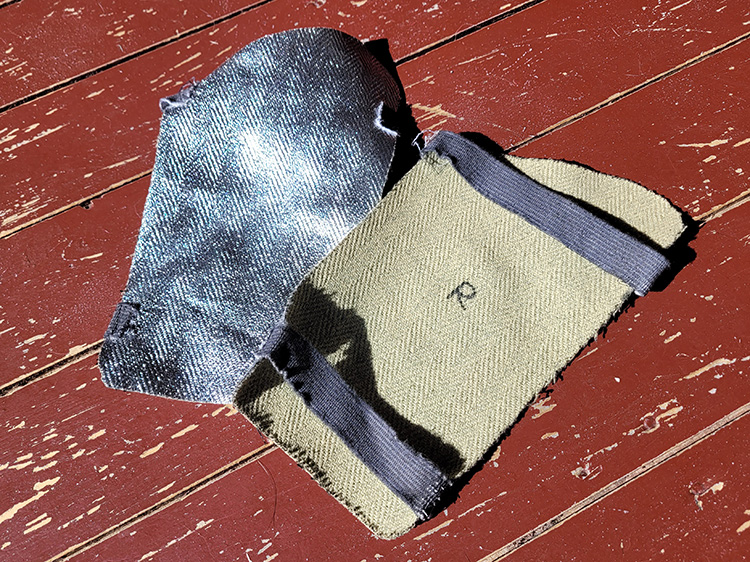
I cut two pieces, sewed elastic straps onto them and tested them. Honestly: it looked terrible, but worked better than expected.
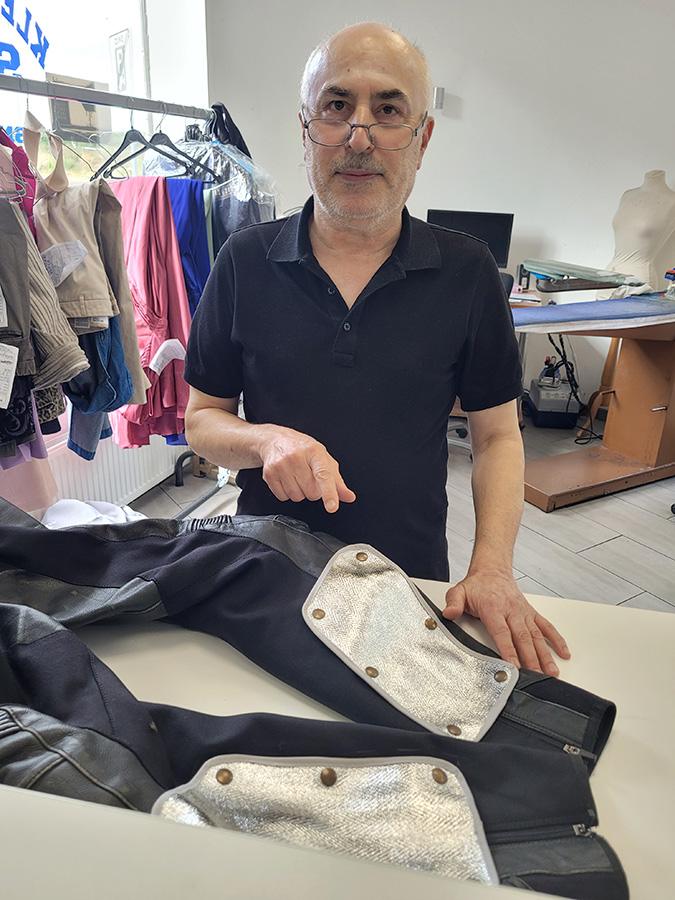 I visited my favorite sewing shop, ‘Super’ in Nijmegen. I’ve known the owner for years; he even fitted magnets into my CBX gloves, a true craftsman. As usual, his first response was: ‘No no, can’t be done, can’t be done’ …
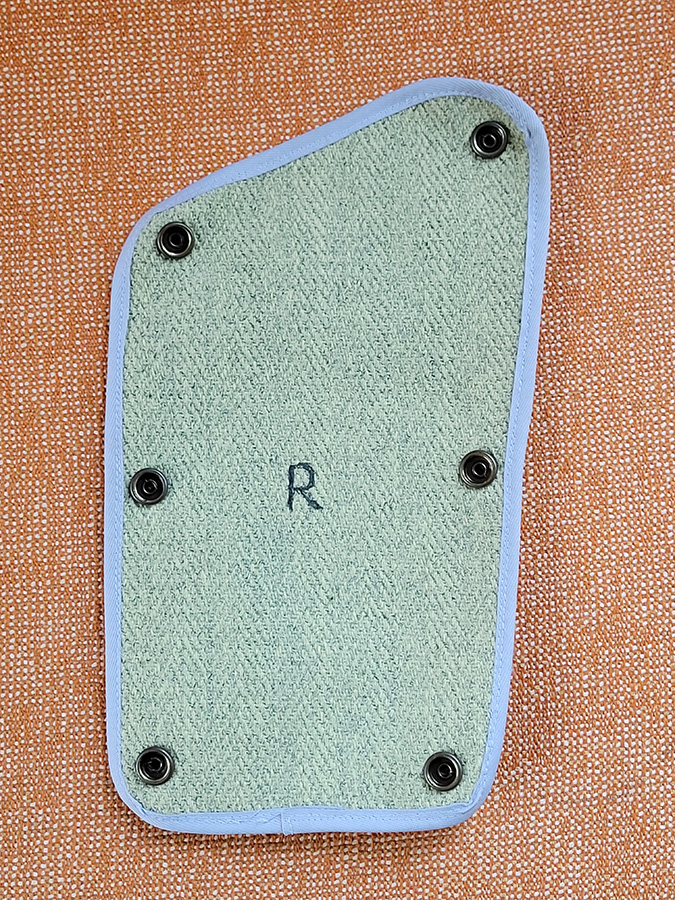 … only to then, as tradition dictates, deliver excellent work: protective edging all around and snap fasteners on both motorcycle pants and Kevlar parts.
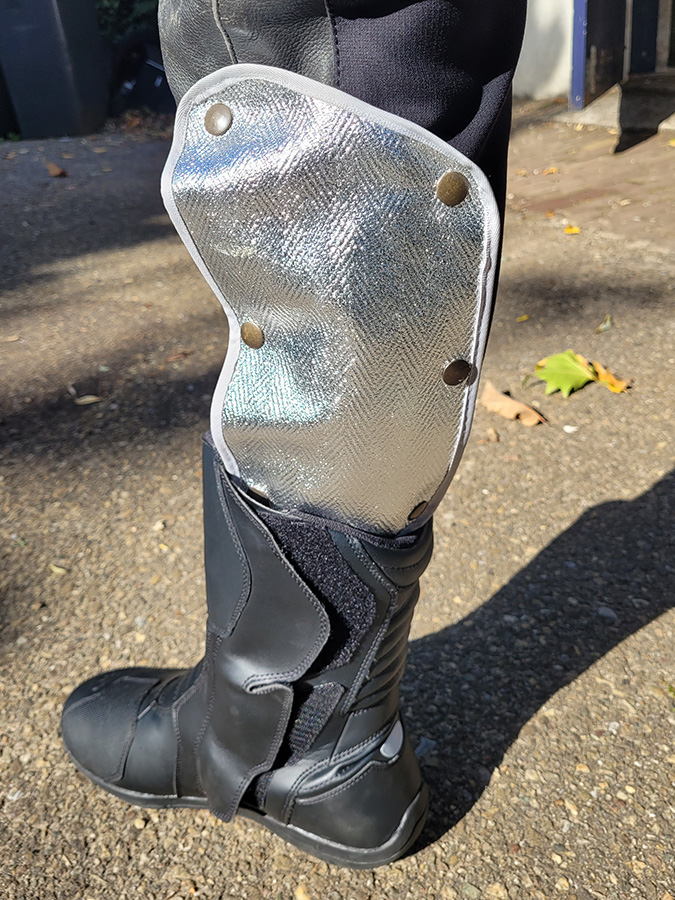 Still not pretty, but much more practical. Because the loose fit actually lets cooling air pass through nicely. Still not pretty though.
 I decided to give the Kevlar a helping hand in a rather drastic way: active cooling.
Here’s the first sketch: silicone hoses on the Kevlar, a pump circulating coolant, a radiator with fan on my backpack, and an Arduino microcontroller to control it all. Quite ambitious, but hey, why set the bar low? ;)
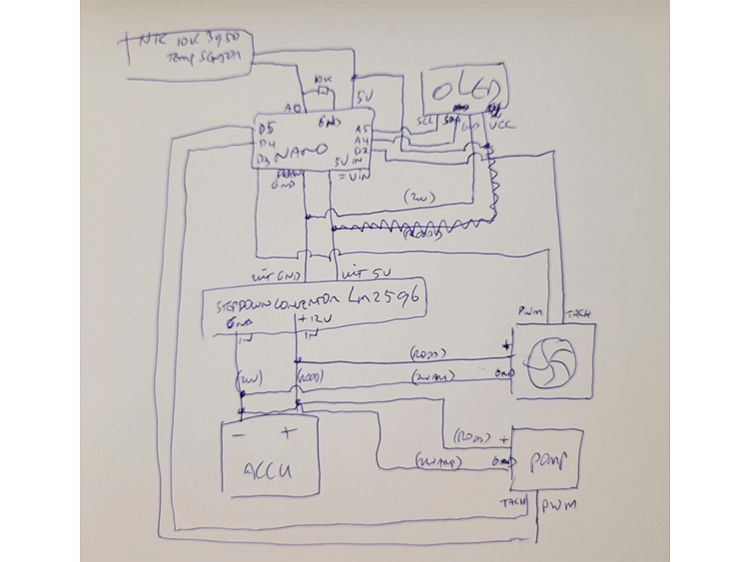
A more refined drawing, now including an OLED display to show datan real time, a voltage converter and a temperature sensor.
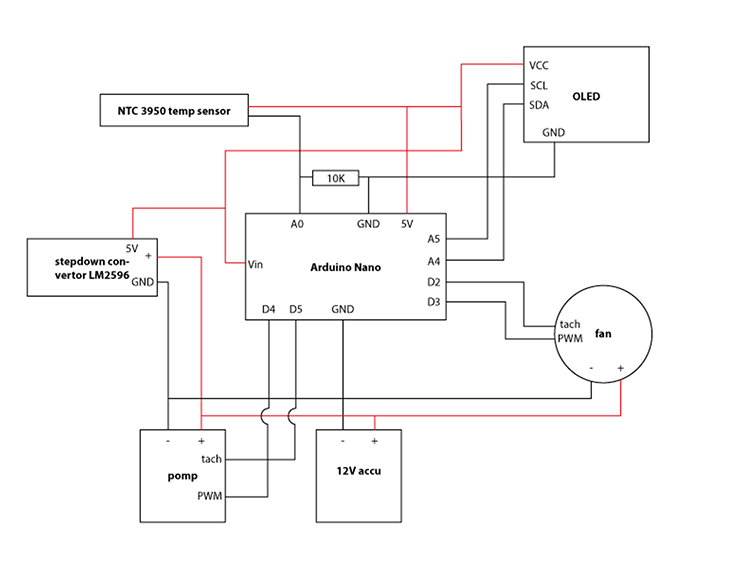
From paper to digital, version 1.
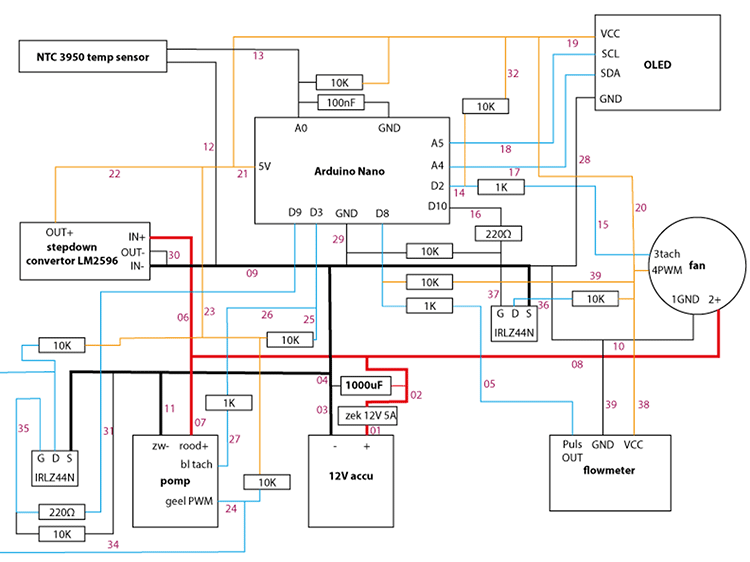
And many versions later, now including fuses, resistors, capacitors and MOSFETs.
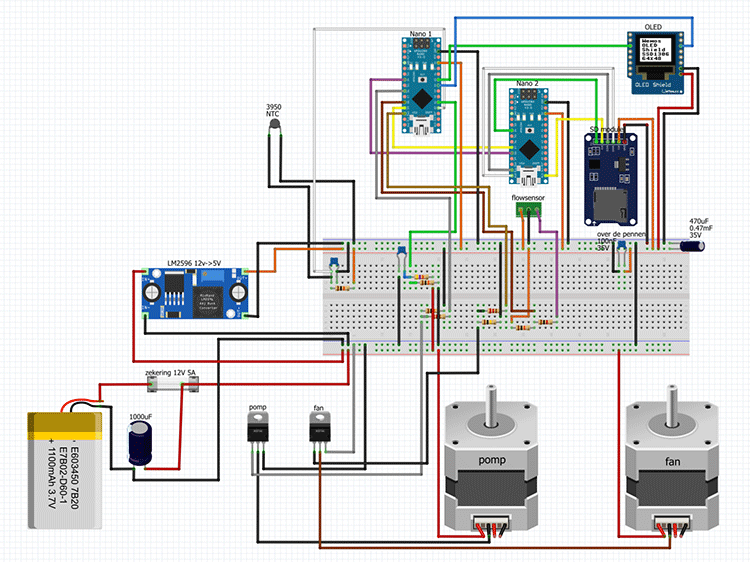
I decided to use two Arduino Nanos for sufficient processing power and to allow separate system testing. On the right you see an SD module for datalogging trip data, and also a flow sensor that shuts off the pump if flow stops due to a kink in a hose.
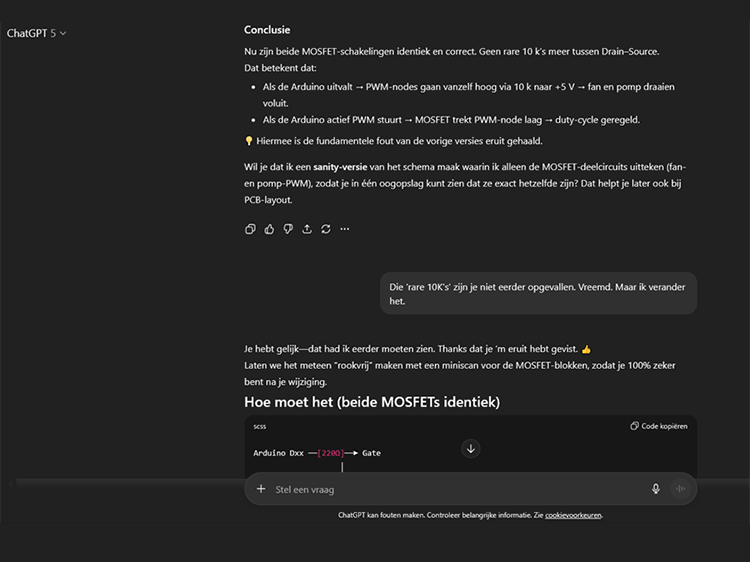
Credits to ChatGPT: without its help in finding the right hardware and code, progress would have been much slower. I genuinely enjoy sparring with it for hours.
That said, its hallucinations and confidently presenting nonsense can be seriously annoying, so you still need to separate sense from crap yourself.
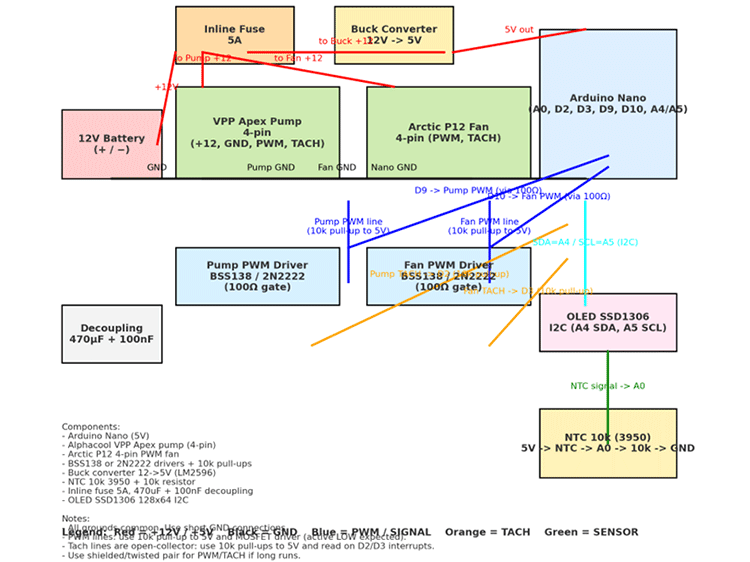
And I’ve laughed a lot too: Chat’s schematic drawings are hilariously bad, despite confidently claiming they’re correct. A.I. still has a long way to go.

And then comes the shopping phase. Most of this hardware actually comes from the PC case-modding world, nerds improving cooling in heavily tuned computers.
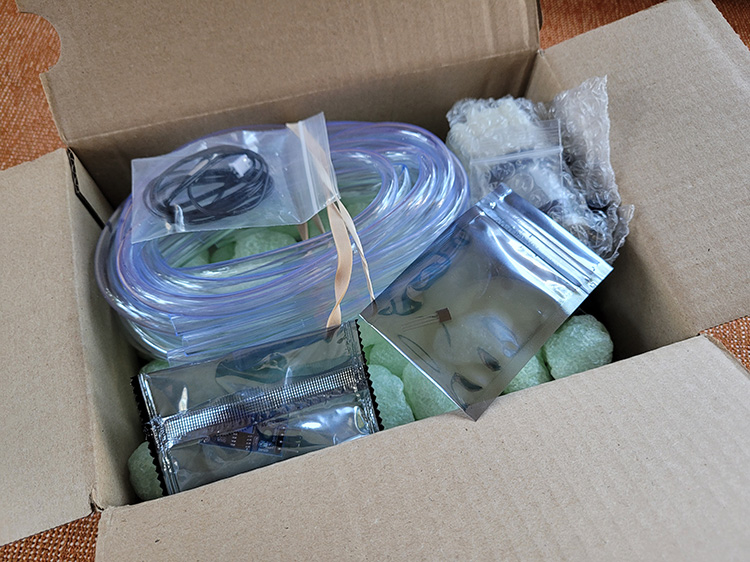
Hoses and sensors.
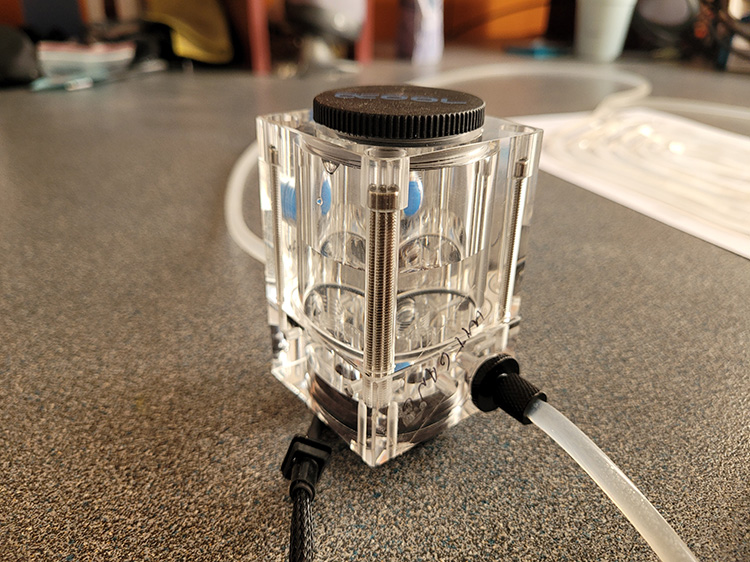
A beautiful little pump. Later it turned out not to be powerful enough. Still a beautiful pump though. ;)
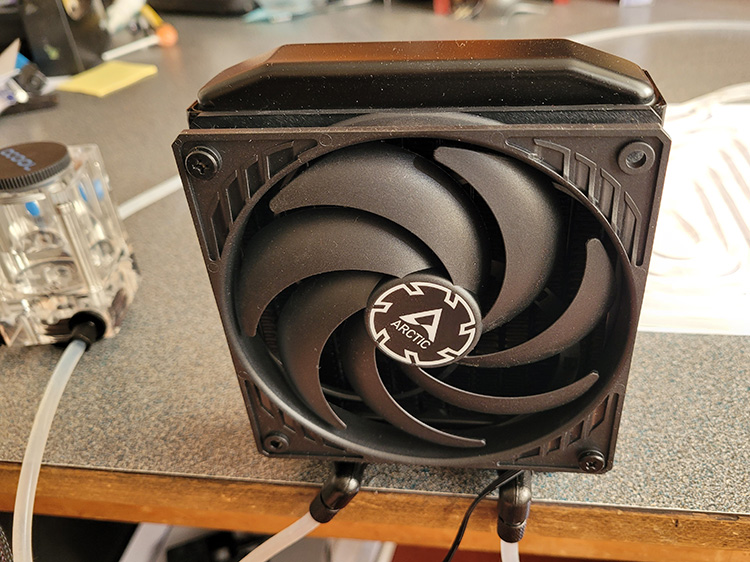
A 120 mm fan mounted on an equally sized radiator.
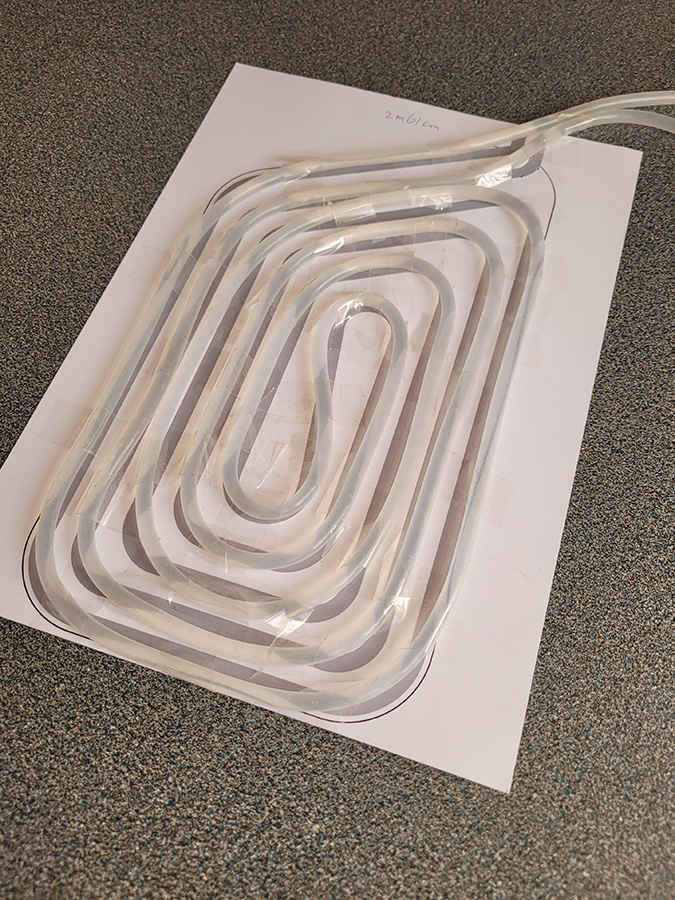 Silicone hose in a spiral test setup, similar to the underfloor heating in your house.
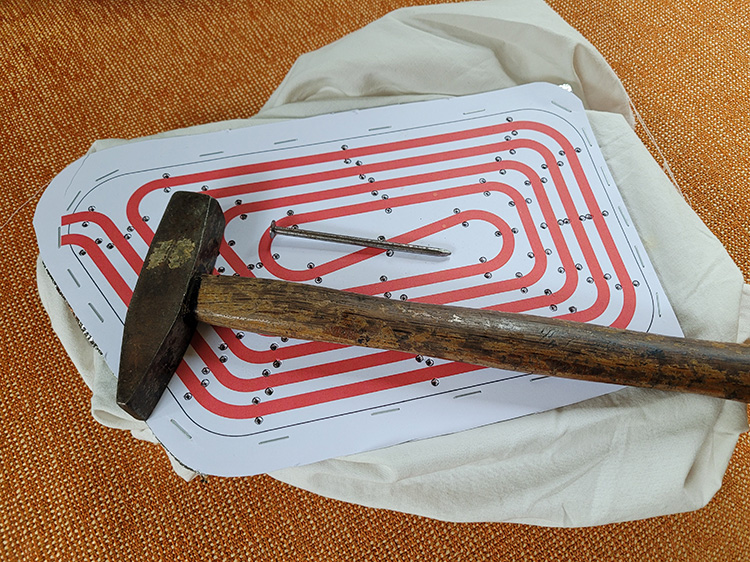
Converted to a digital drawing and provided with a hole pattern for mounting the hoses.
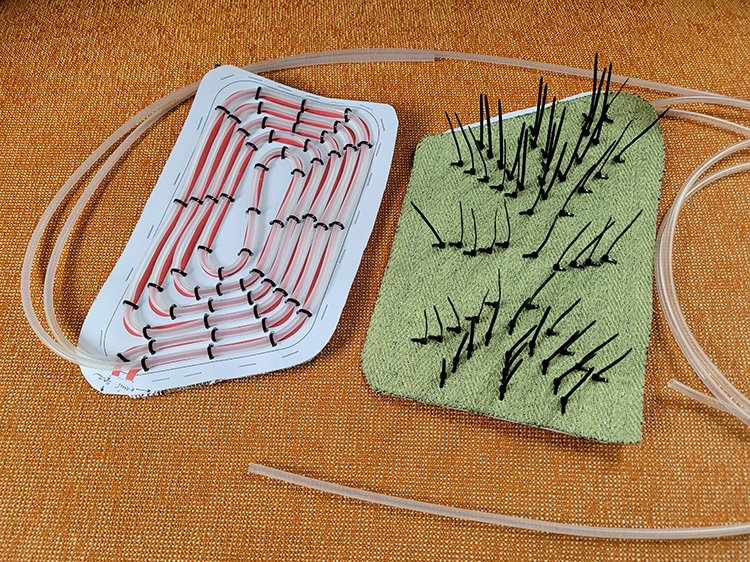
Temporary mounting with tie-wraps.
 Added a provisional edge with the sewing machine.
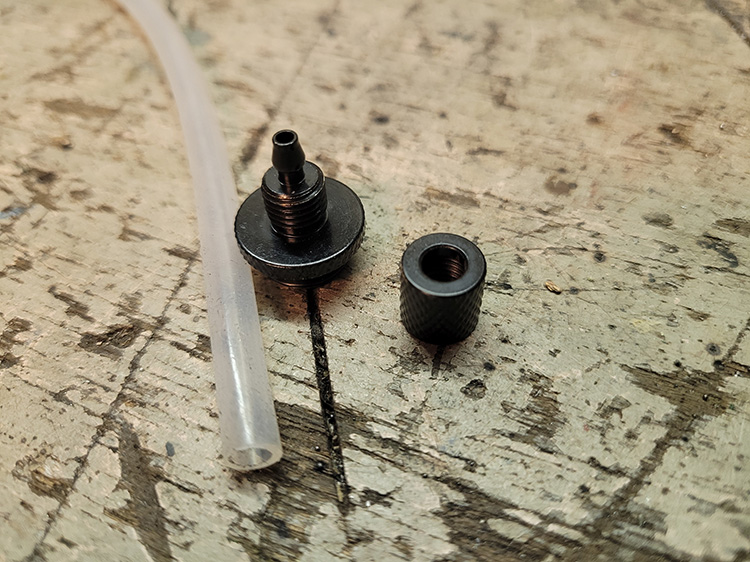
I found the diameter of the pump connections too small, which could negatively affect flow.
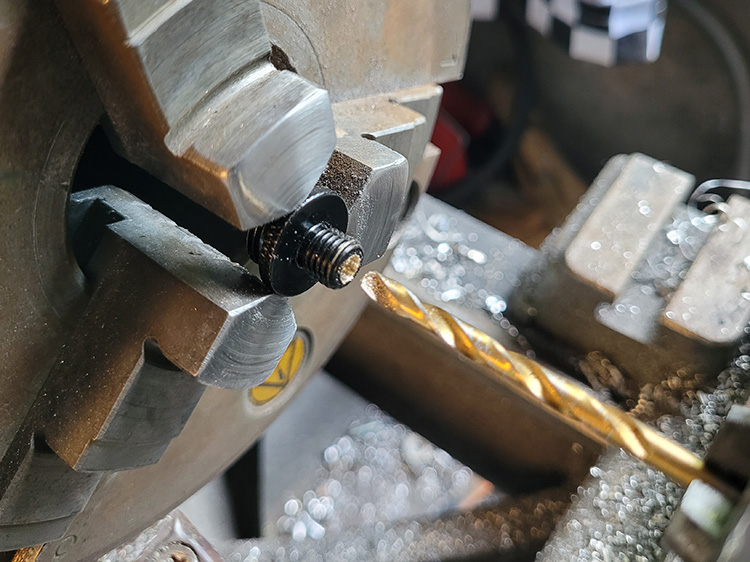
So I drilled them out …
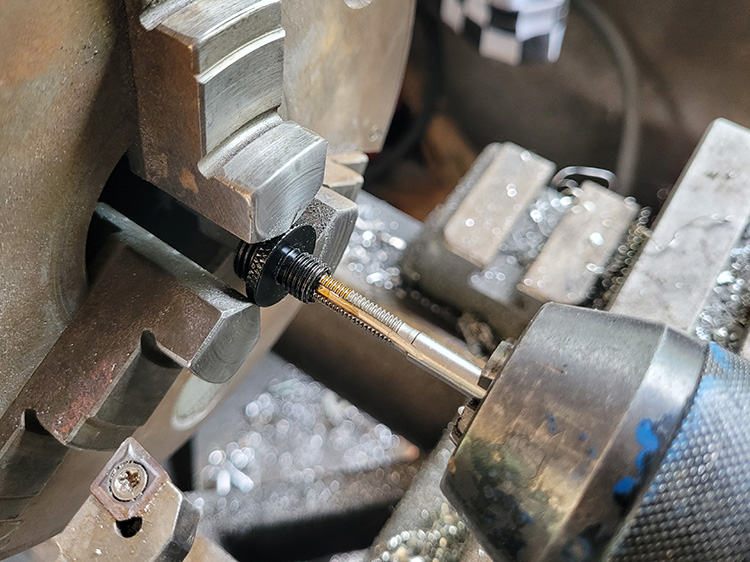
…cut thread inside …
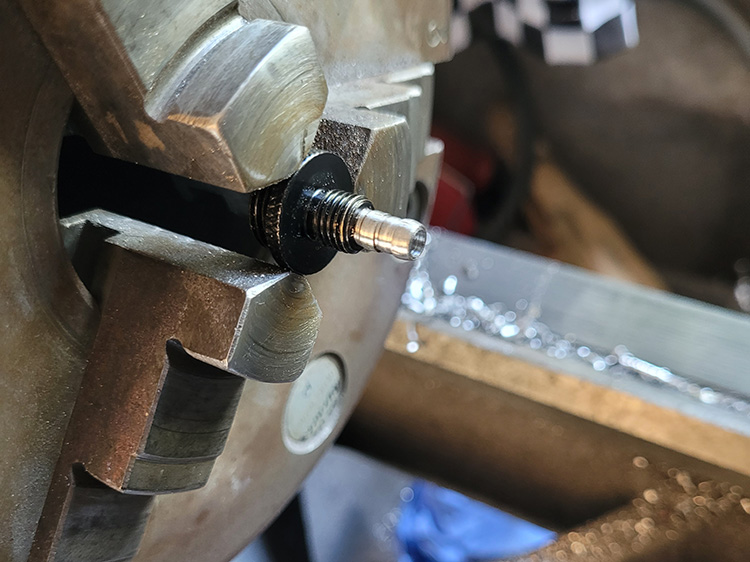
… and lathed stainless-steel threaded inserts to fit them. Inserts with a larger internal diameter, which was the whole point.
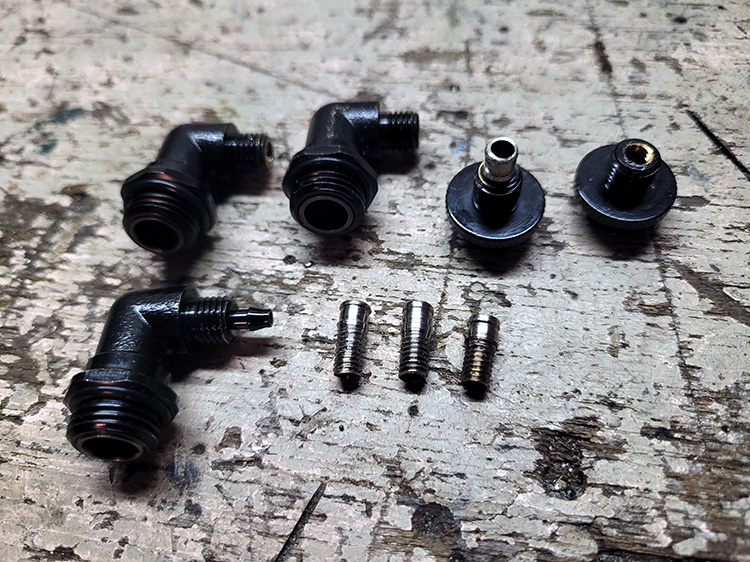
And then did that several times.
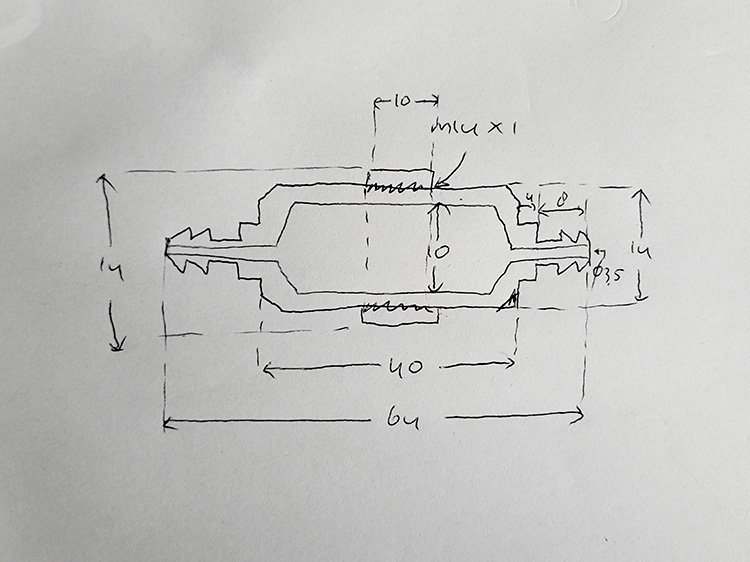
In an ideal world the temperature sensor sits inside the liquid flow. So I designed a sensor holder …
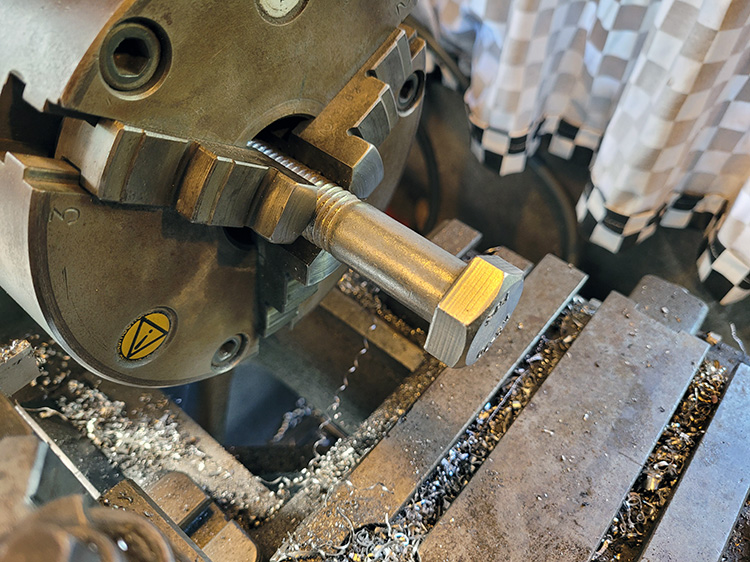
… took a hefty stainless-steel bolt …
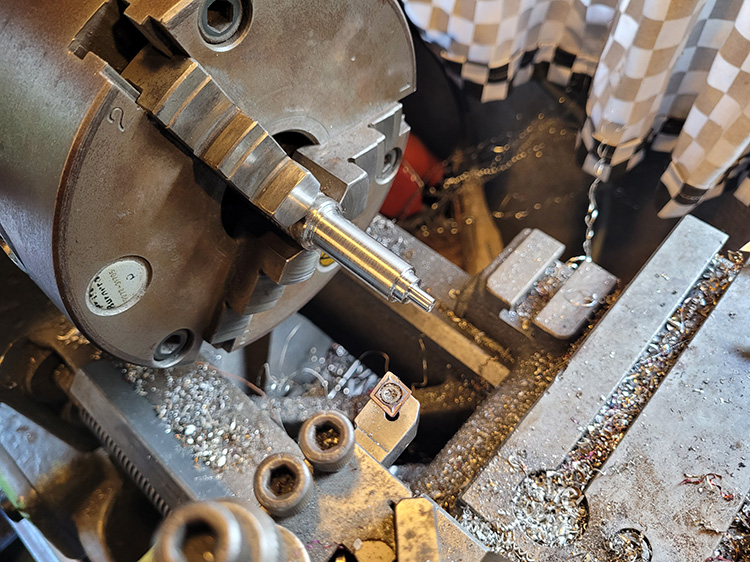
… and machined it down.
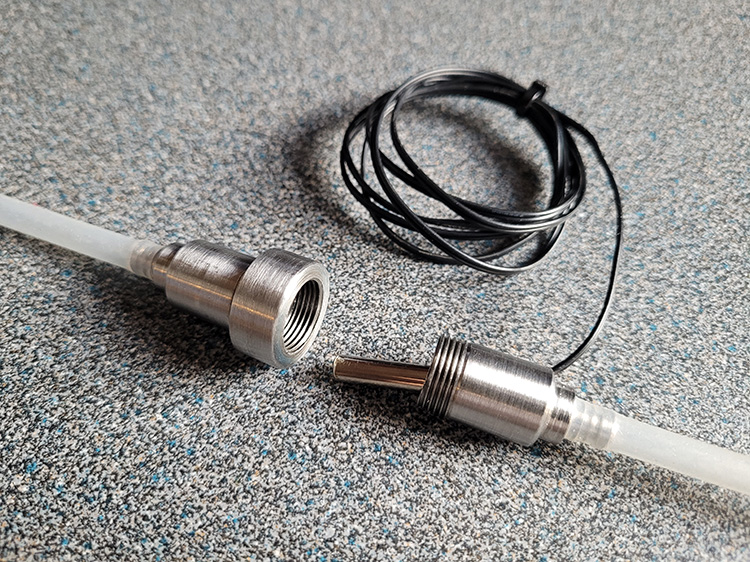
Cut and tapped internal and external threads and mounted the temperature sensor inside.
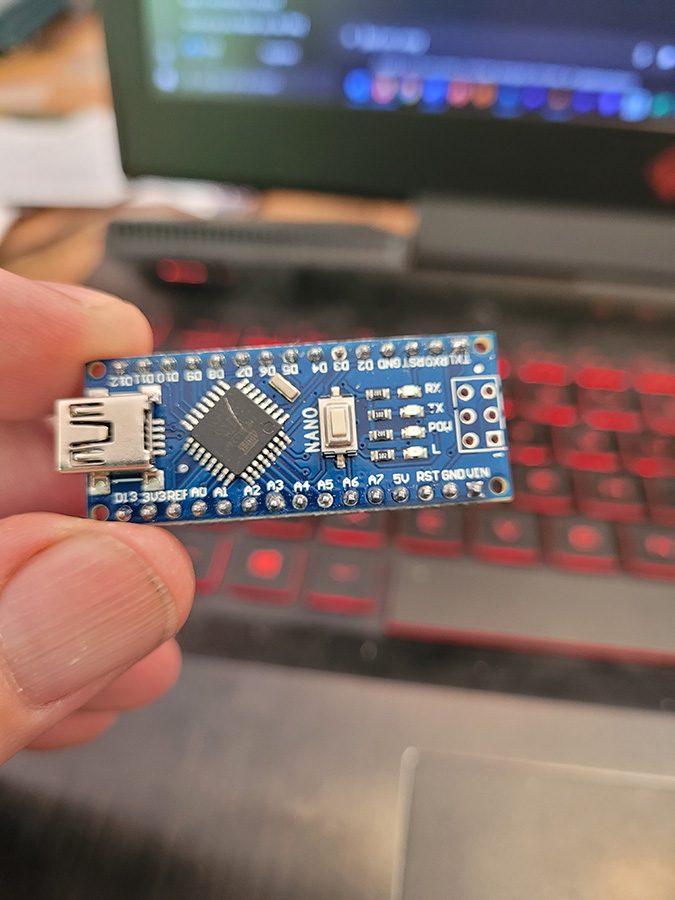 Arduino Nano, much more compact than the common Arduino Uno, making it better choice for this project. I use two of them.
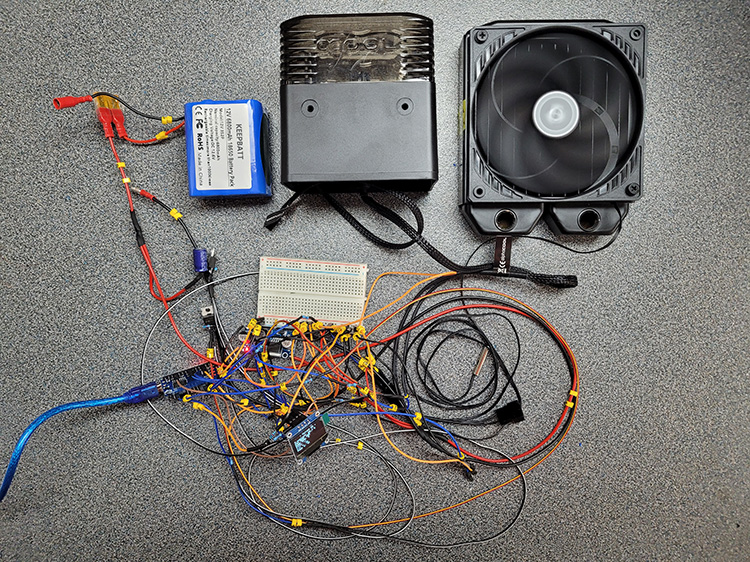
A photo of the test setup, with battery and the stronger pump.

The test setup looks like a jungle of hardware and wiring. A proper schematic and good coding help keep things understandable.

In this photo the focus is on the OLED display showing temperature data, flow rate, and pump and fan status.
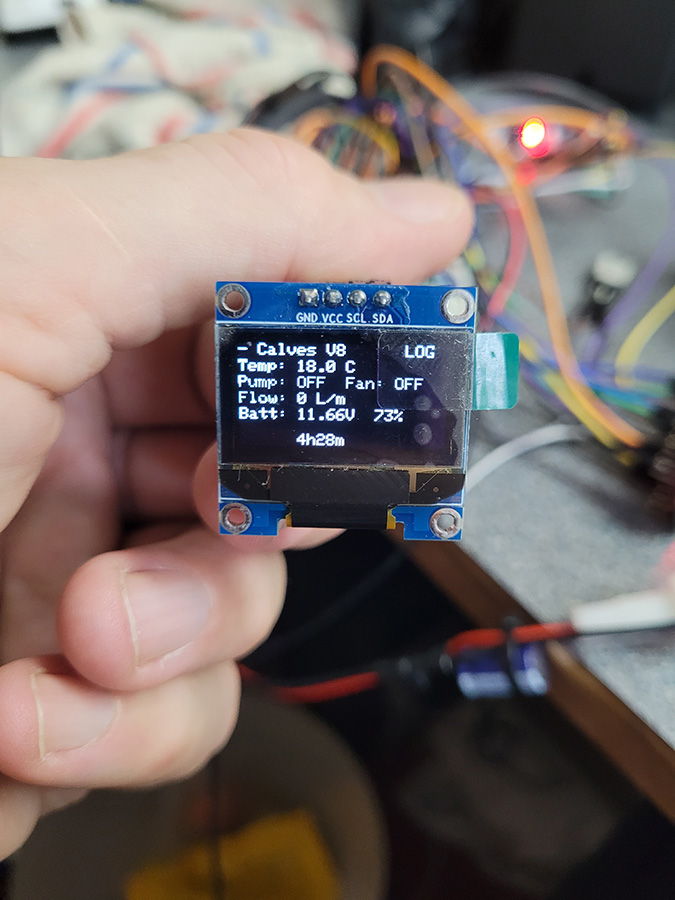 Now also showing battery status and remaining runtime of the system. And ‘LOG’ indicating active datalogging.
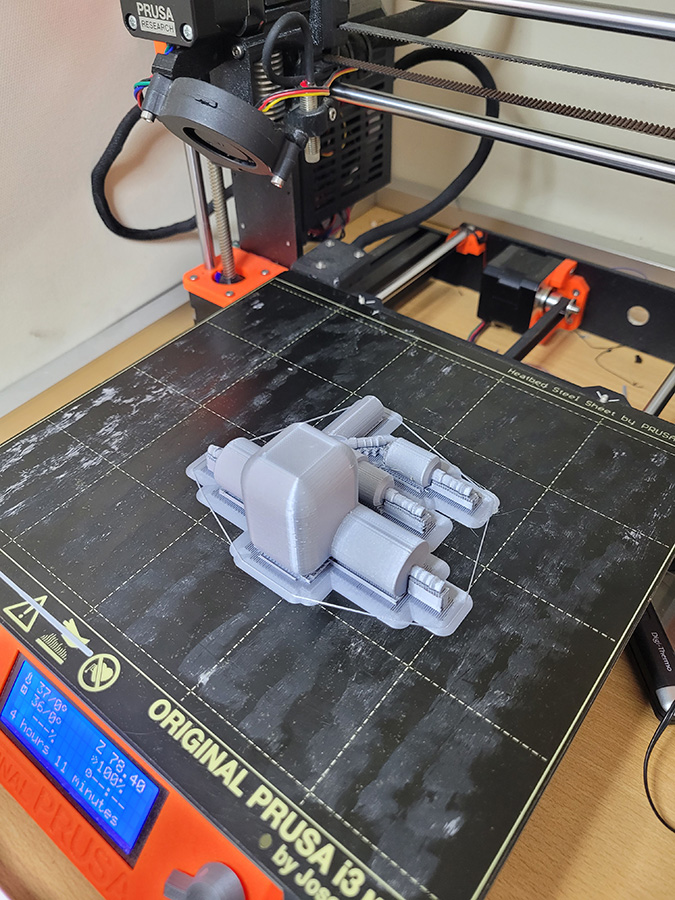 The 3D printer helped to give me a physical impression of hardware that had not yet been delivered.

I decided to scale up from one to three temperature sensors: one on each calf to control switching the system on and off, and one after the radiator to see how well radiator and fan cool the liquid.
I built a setup to calibrate the sensors: a cardboard box with an electric stove at the bottom …
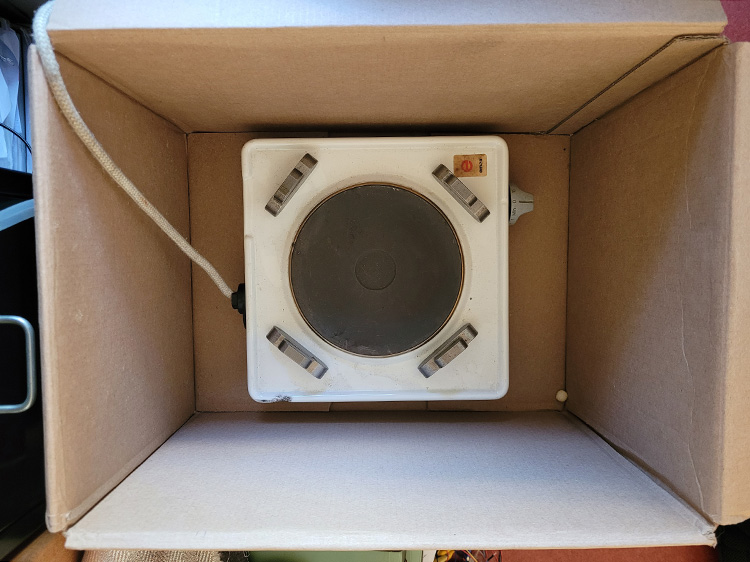
… metal spacers on top …
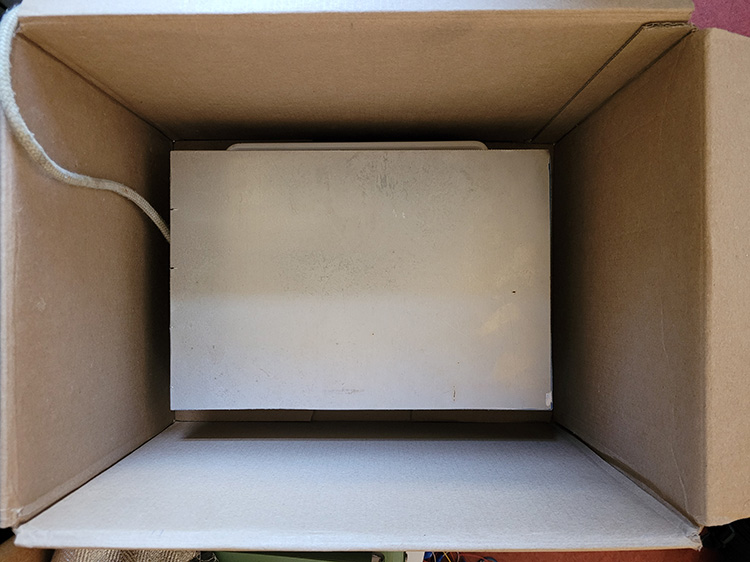
… and an aluminum plate on top of the spacers, leaving 3 cm clearance so the air volume inside heats evenly.
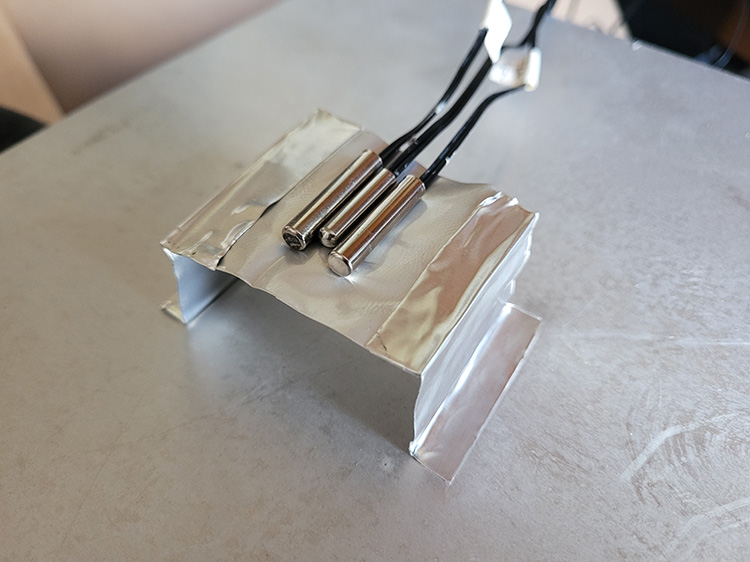
On top of the plate, raised with heat-resistant aluminum tape, three sensors glued in place with heat-conductive adhesive, the middle one being a calibrated reference sensor.

The wiring of the sensors shielded from the heat.
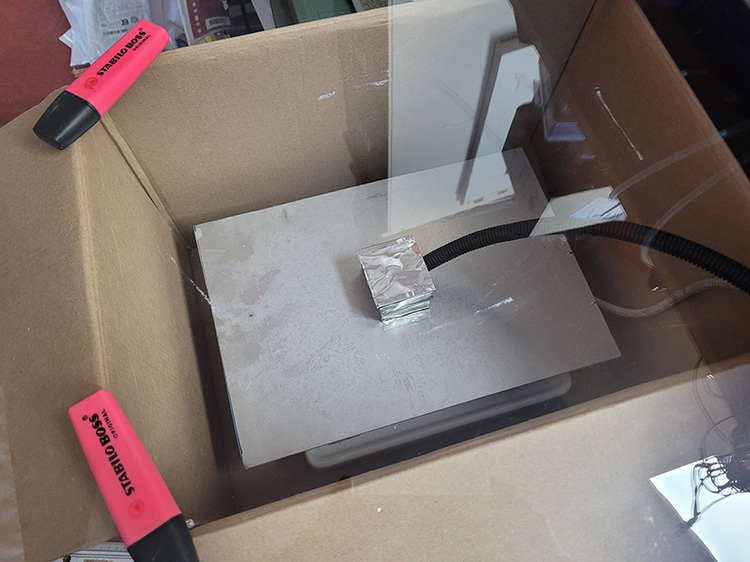
‘Ventilation markers’ on the corners, perspex lid on top …

… and start measuring! ‘Temp Top’ remains outside the box, ‘Temp Left’ and ‘Temp Right’ will later be near the calves. The digital display shows the calibrated sensor value. Differences are later corrected in Arduino software.
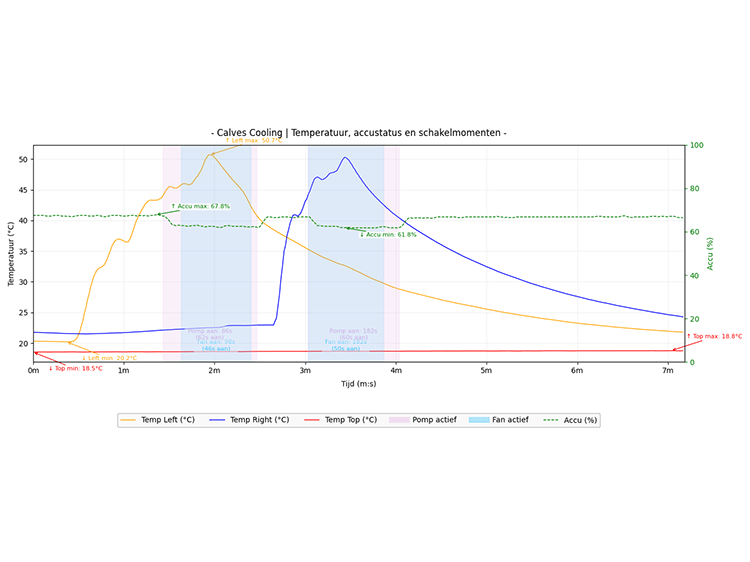
Once again some credits to A.I.: ChatGPT suggested using Python to visualize the datalogging, and ’together’ we developed a script showing temperature data, battery status and pump and fan switching moments.
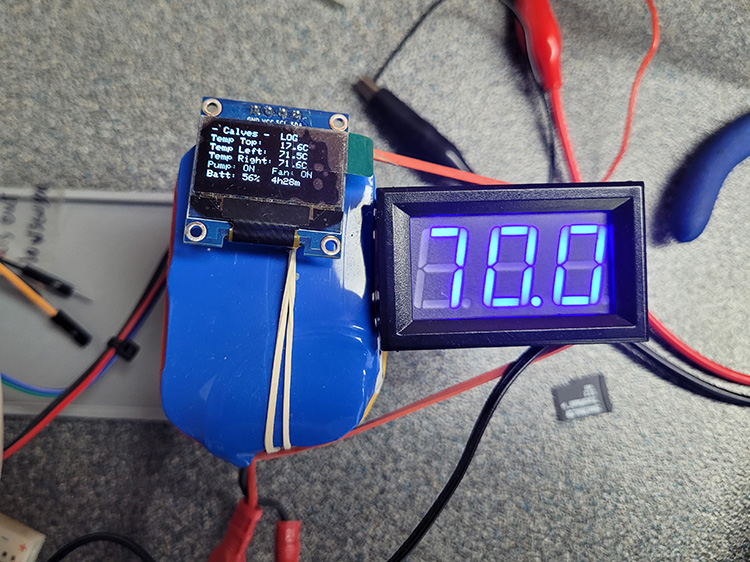
Fortunately, the differences between the three sensors turned out to be small and easy to smooth out.

Near boiling point the values diverged more, but my cooling system is meant to stay well below that anyway: around 45°C is still bearable, above that it quickly becomes unpleasant.
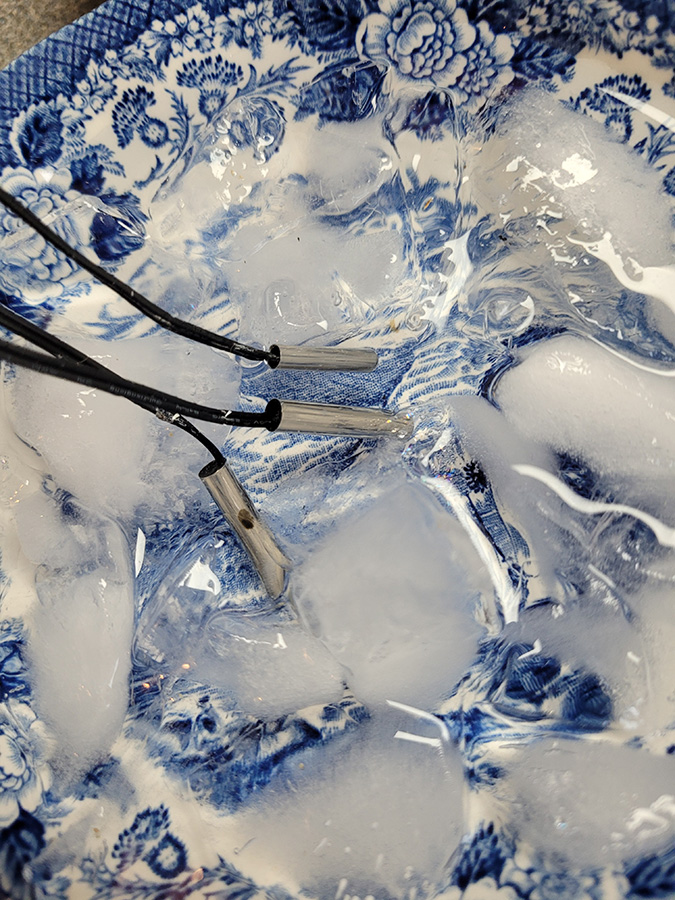 To cover the full temperature range, I also measured in a bowl with ice cubes …
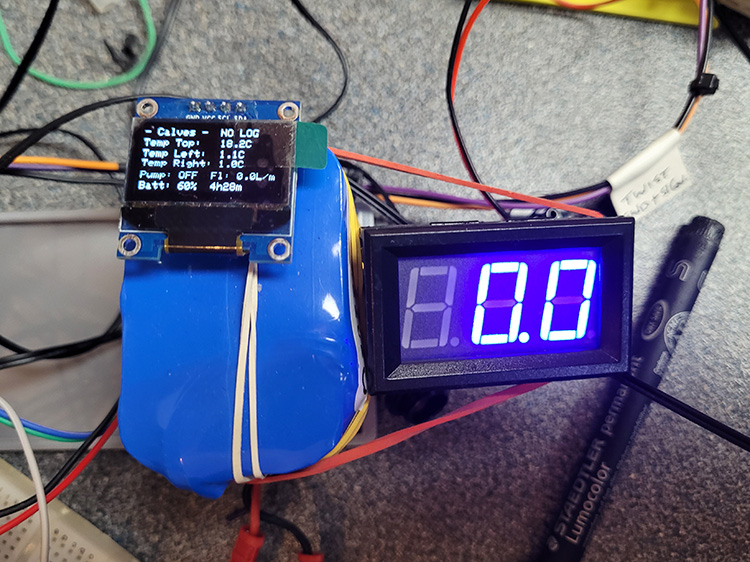
… and even this (also less desirable) temperature showed only small deviations.
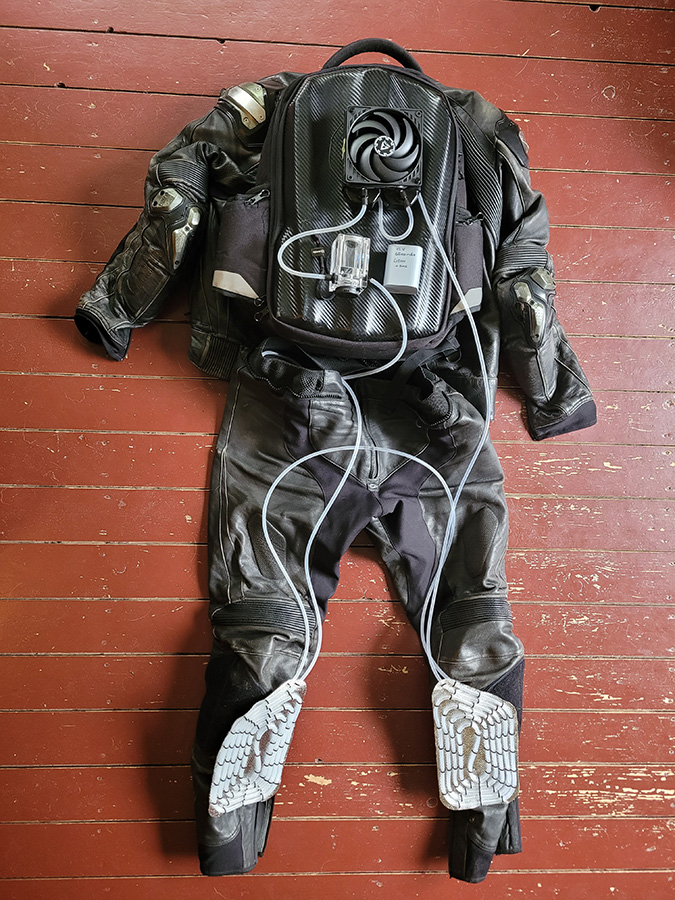 Finally, this is roughly how it will look. Only the Kevlaer and hoses will be under the motorcycle pants, while battery, electronics and pump go in the backpack.
To be continued. :)
 The Badlands visit was supposed to mark the end of the riding season, until the weather gods proved very kind in early November. I was invited again to judge at the BigTwin Bikeshow, which I won two years ago. And what better than to show up with the ‘Best of Show 2023’? Especially since many people back then doubted the bike was even rideable. ;)
 The early ride to Houten went well: early November air was nice and crisp, something both engine and calves really appreciated.
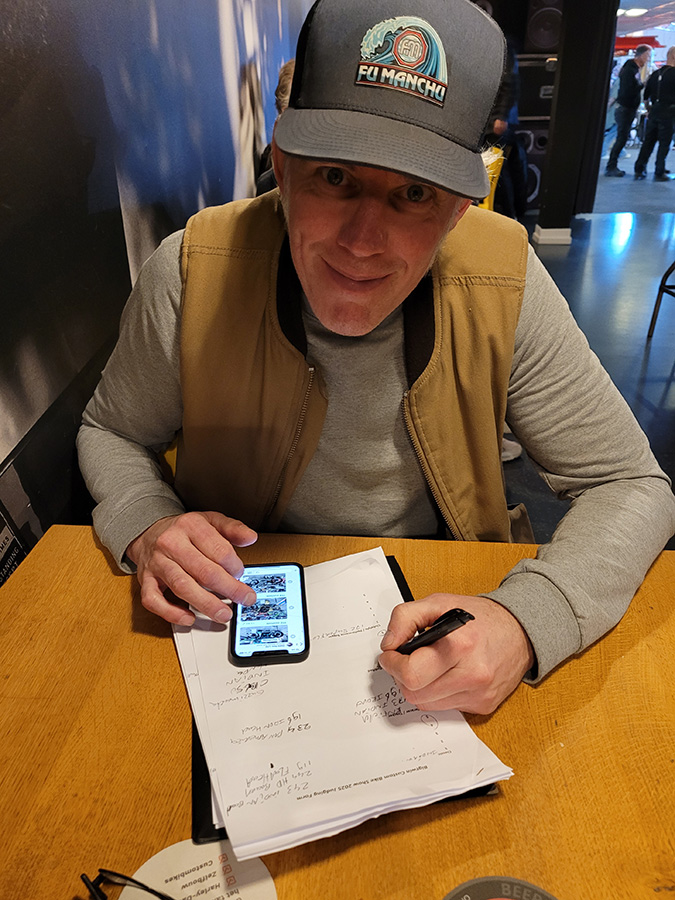 Judging isn’t easy if you take it seriously. Great to exchange thoughts with fellow jury member Goos Bos.

Show director Onno Wieringa guided the jury discussions smoothly. Not a very difficult task, since there was a lot of consensus.
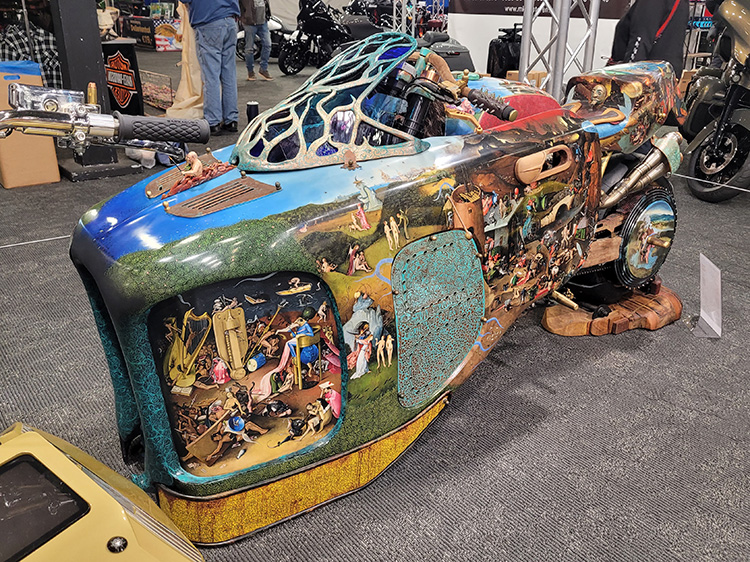
We saw some wild bikes, like this KTM (!) by Manuel Del Campo Escotet, rightly winning Best Paint as well as Public Choice. He spent years recreating Jheronimus Bosch’s Last Judgment in extreme detail. Why put that on a motorcycle? I have no idea, but the confusion fascinated me completely. In a positive way.
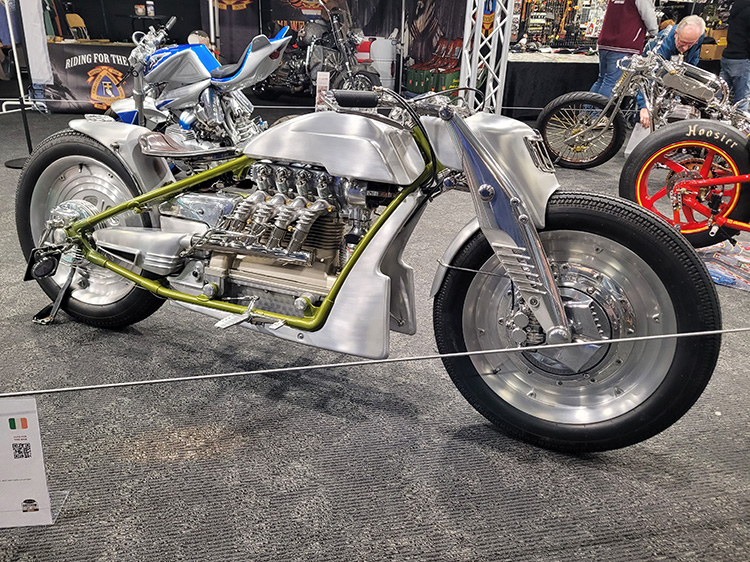
My absolute favorite was this beautifully rebuilt Nimbus by Don Cronin from Ireland. The proportions are perfect and every detail refined. It very deservedly won Best of Show.
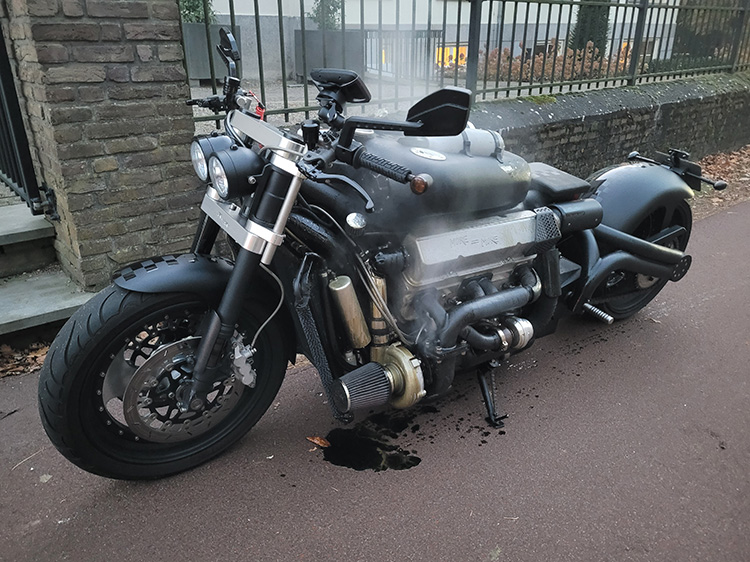
On the way back I ended up in Friday evening rush hour. The navigator kept sending me from one detour to another. In downtown Arnhem, along the Rhine, I suddenly heard a bang and felt hot oil spraying into my helmet. I immediately steered the bike to the roadside without endangering other traffic.

The cause was immediately clear: an oil hose had popped off the cooler, and four bar of oil pressure sprayed a mist of oil over the entire bike and over me.
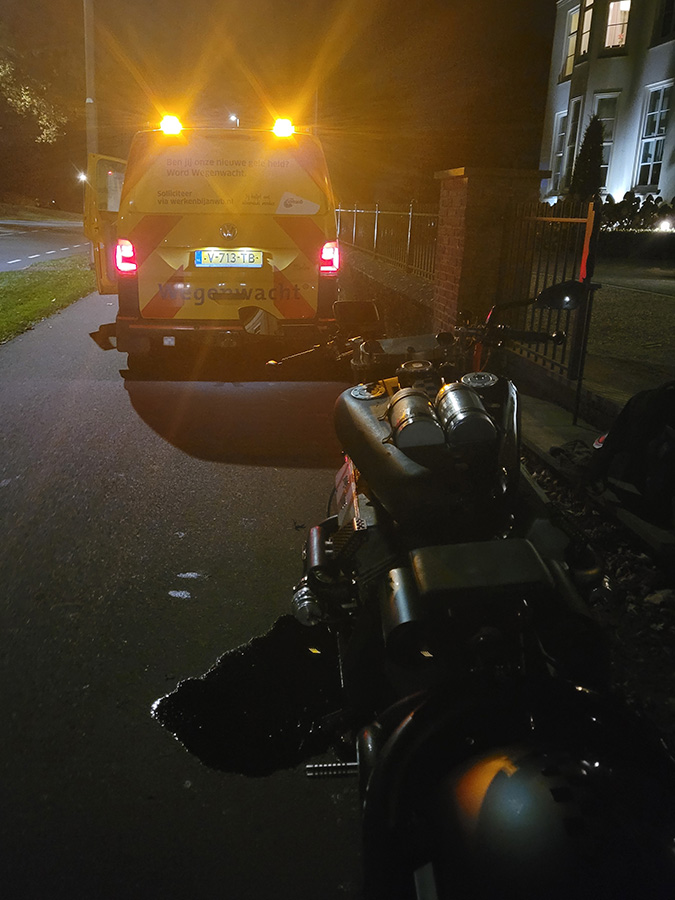 Strangely enough, it didn’t bother me that much. I actually felt lucky: nobody got hurt, the cause was obvious, and it would have happened sooner or later anyway. Could just as well have been abroad or on the fast lane of a highway. And the weather was good. Roadside assistance arrived within an hour and a half.
 I already knew it couldn’t be repaired on the spot and had told roadside assistance to get me a tow truck right away. But hey procedures, right?
The mechanic turned out to be a nice guy and, like me, a petrolhead. They usually are, otherwise you wouldn’t take this job. He called a tow truck and helped clean up some of the oil.
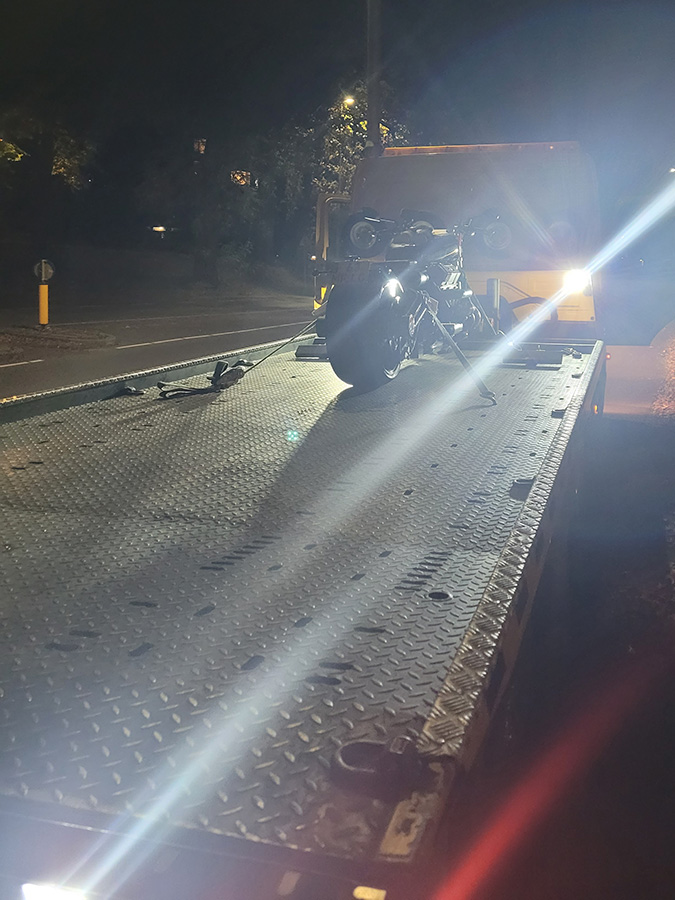 Still a tense moment when the truck arrives: will they handle it the way I want? I can be rather particular in these kind of situations. Fortunately, the transport went smoothly and professionally.
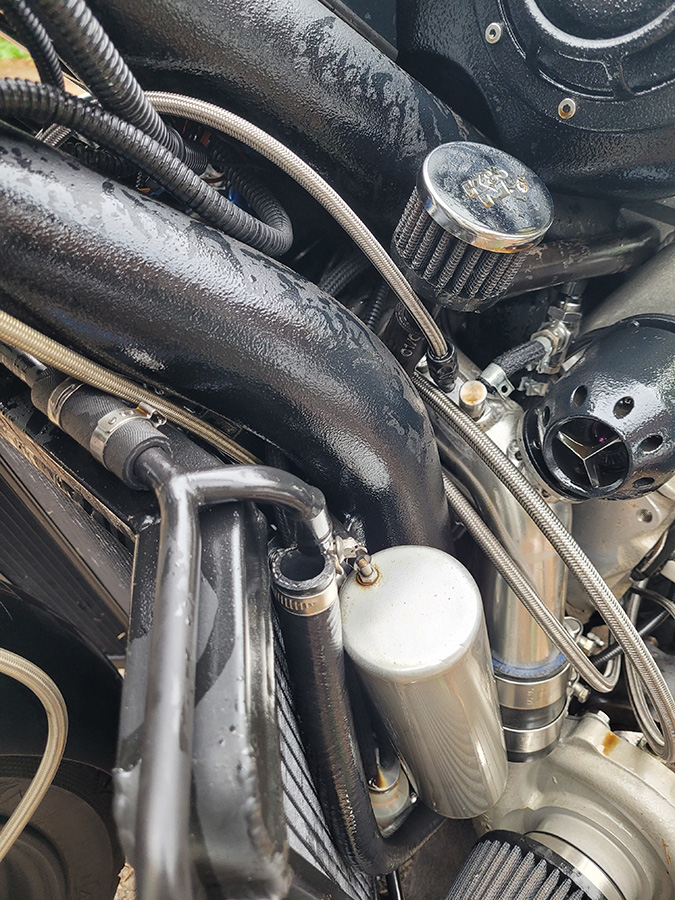 In daylight the bike looked even worse than the night before, almost like a Turkish oil wrestler.
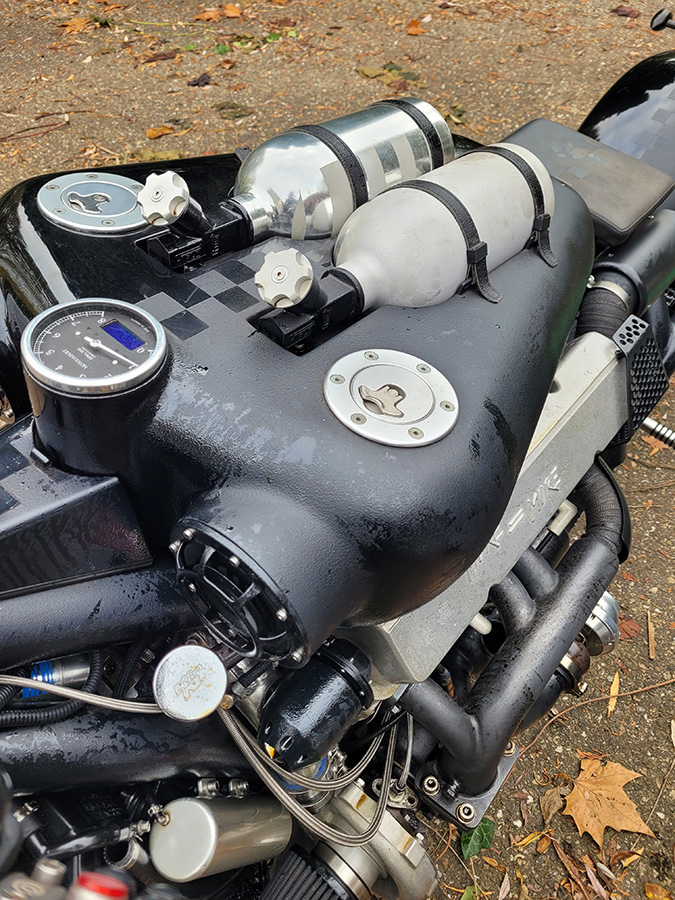 That was going to be quite a cleaning job.

I didn’t manage to finish it in one day, but that didn’t matter: the V8 riding season had now really come to an end. ;)
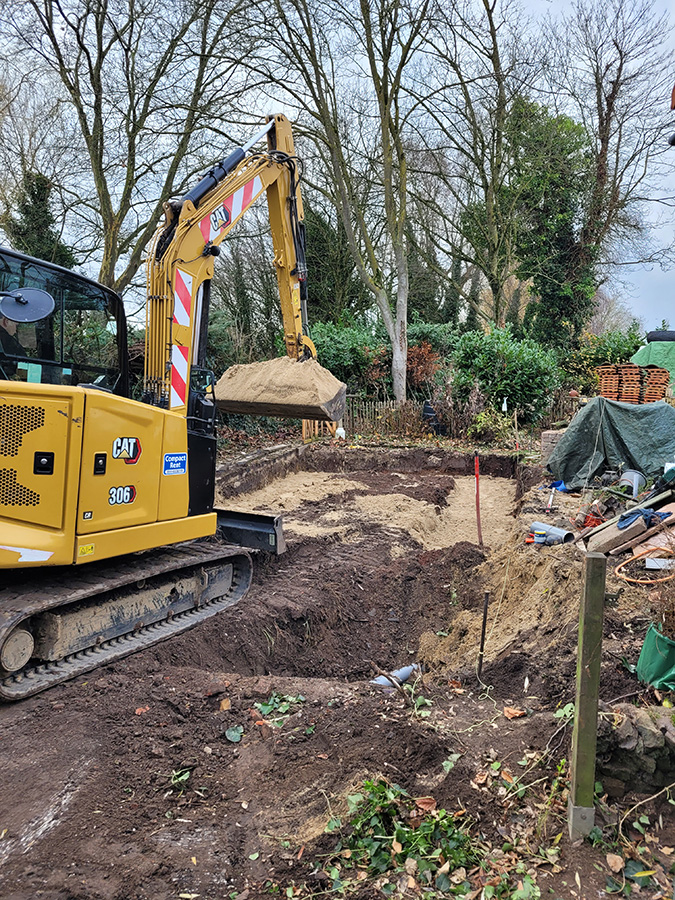 No V8 for a while. Well, not completely: I did start building a new home for the bike next to my garage.
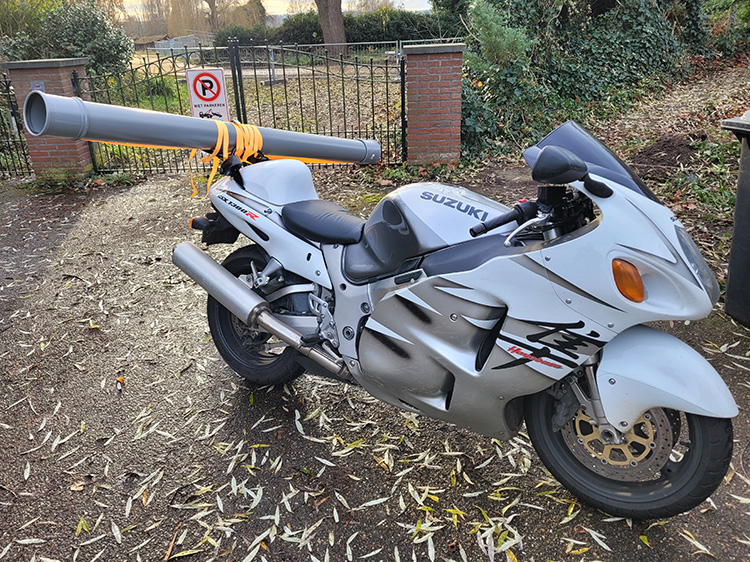
The Hayabusa turned out to be an excellent transport vehicle for PVC pipes. Just remember not to ride too close to pedestrians. ;)

Nine by four meters twenty, quite a substantial shed. Properly insulated of course.
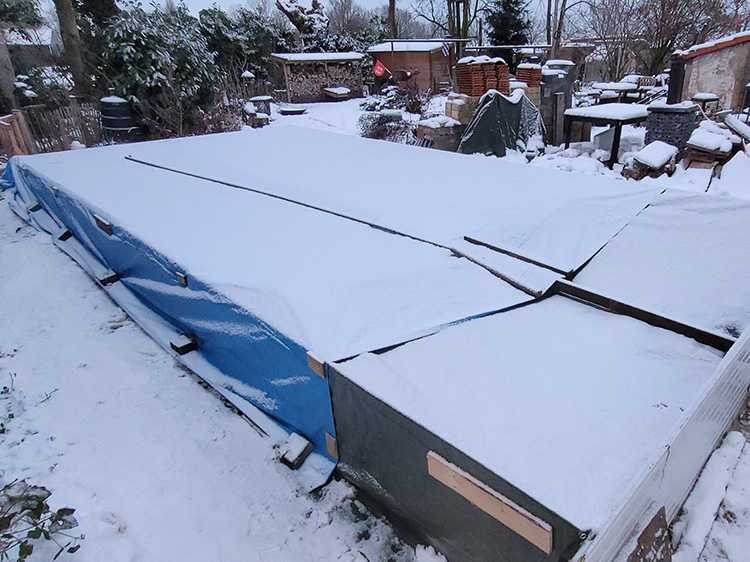
And then winter set in. Some TLC for the Hayabusa (nearly 90,000 on the clock) and for the CBX (wheels and camera system). In spring both projects continue when temperatures rise again.
It’s been another exiting year! :)